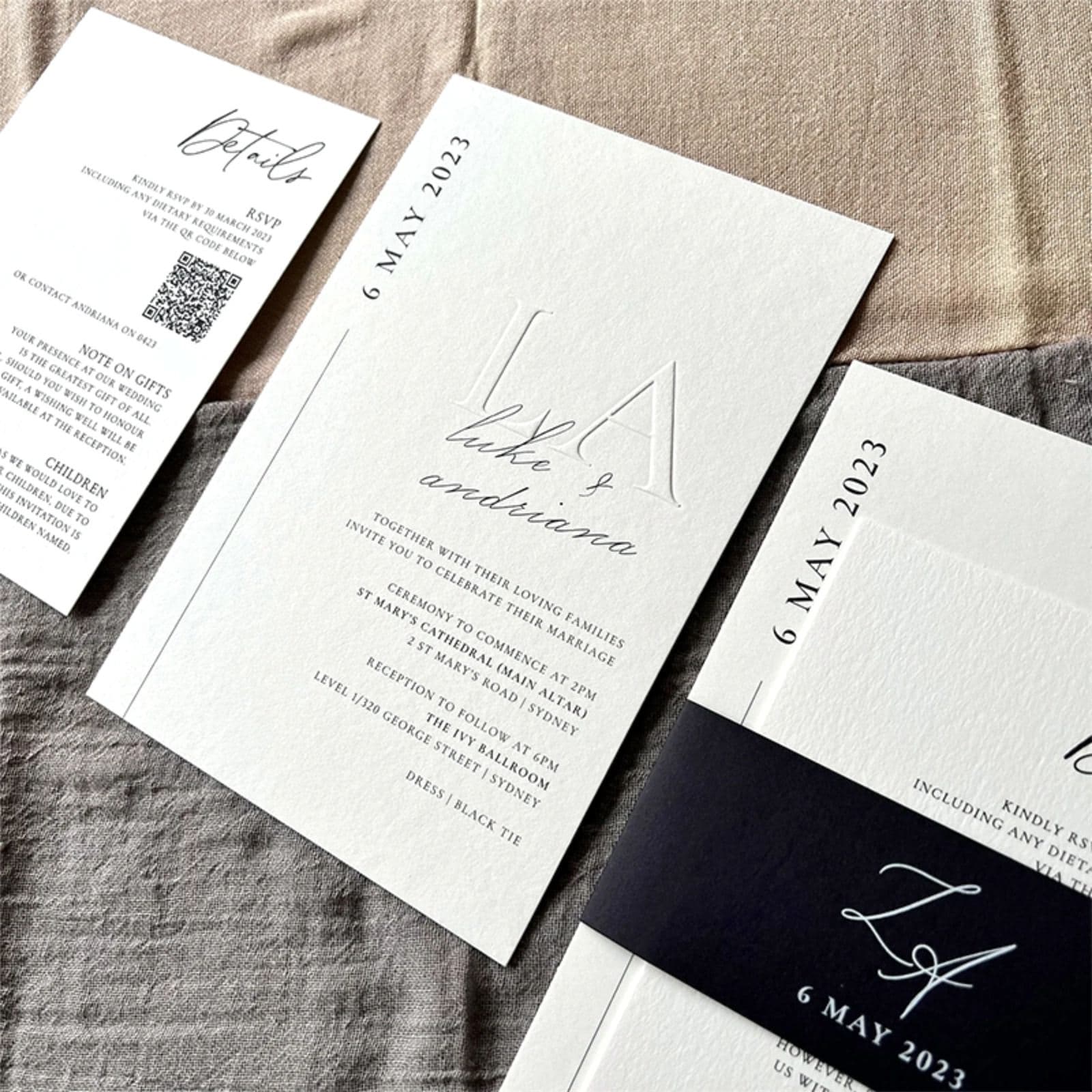
How to set an RSVP deadline people actually meet, what to ask on the form, and how to chase stragglers without losing your mind.
when should RSVPs be due?
Four to six weeks before the wedding. That's the answer for almost every Australian wedding, and here's the reasoning: your venue and caterer typically need final numbers two to three weeks out, and you need a buffer for the guests who miss the deadline, because some will.
Set the printed deadline earlier than you truly need it. If the caterer needs numbers three weeks out, make your RSVP date five weeks out. The gap is your chasing window, and it turns stragglers from a crisis into a minor errand.
what to ask on the RSVP form
Every extra question costs you responses. The couples who get fast, complete RSVPs ask only what they'll act on:
- Name (and who the response covers, for couples and families)
- Attending or not
- Dietary requirements and allergies
- Optional: a song request, the one fun question guests enjoy
paper reply cards vs. online RSVPs
Reply cards are traditional and lovely, and they come back slowly, half-filled, and occasionally with no name on them (it happens at nearly every wedding). They also need return postage and someone to tally them.
An online RSVP through your wedding website removes all of that. Guests respond in thirty seconds from the invitation in their hand, you watch the count update live, and dietary requirements arrive attached to the right name. On marrymint.co, RSVP collection is built into every wedding website, including the Free plan, with responses feeding straight into your guest list.
If you love the tradition of a reply card, a hybrid works: cards for the older relatives who'd enjoy returning one, the website for everyone else.
chasing stragglers (the part nobody warns you about)
Expect 10 to 20 percent of your list to miss the deadline. This isn't rudeness; it's people assuming you know they're coming, or the invitation sitting under a pile of mail. Plan the chase rather than resenting it.
A week after the deadline, send a short, warm message to everyone outstanding: 'hey! finalising numbers with the caterer this week, are you able to make it?' Direct message beats group post, and a link straight to your RSVP form removes the last excuse. The handful who still don't respond get a phone call, usually delegated to whichever parent knows them best.
RSVP wording that works
On the invitation or website, keep it simple and specific: 'please rsvp by 14 march at sarahandjames.com'. A named date outperforms 'rsvp by march' and a printed website address outperforms 'details to follow'.
If you're not inviting children or plus-ones, the RSVP form is where this lands gently: list the invited guests by name on their form rather than offering open seats. The form quietly answers the question before it's asked.
faq
common questions
How long should guests have to RSVP?+
Six to eight weeks between receiving the invitation and the RSVP deadline is comfortable. Shorter than four weeks feels rushed; longer than ten and the invitation gets filed and forgotten.
Is a free wedding RSVP website any good?+
For collecting names, attendance, and dietary requirements, yes. marrymint.co includes RSVP collection on its Free plan, with the form built into your wedding website rather than a separate survey link.
What do you do when guests don't RSVP?+
Message them directly about a week after the deadline with a specific reason ('finalising catering numbers') and a direct link to the form. Phone the final few. Build this chasing week into your timeline so it doesn't collide with venue deadlines.
Should you put dietary requirements on the RSVP?+
Yes, always. Collecting them at RSVP time, attached to the right guest name, is dramatically easier than reconstructing them from texts the week before. It's one of the strongest arguments for an online form.